Skate park terms explained: bowl, street, vert and more
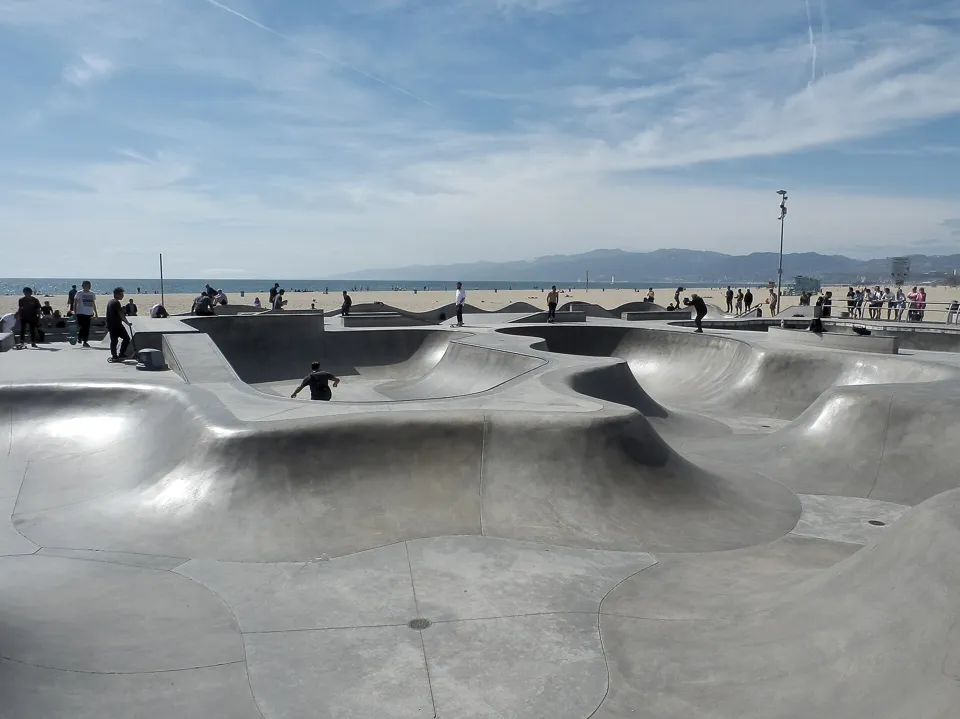
A bowl is a sunken, rounded basin; street means flat ground with ledges, rails and stairs; transition is any curved ramp; vert is the steep, near-vertical top of a tall ramp; and coping is the metal or concrete lip at the top of a ramp.
Updated November 2026
The two big styles: street and transition
Almost every skate park mixes two styles. Street sections copy things you find in a city: flat ground, ledges, handrails, stairs, benches and banks. Transition (often shortened to "tranny" by skaters) means any curved surface that turns horizontal speed into vertical movement: quarter pipes, halfpipes and bowls. When a park listing says "street plaza", expect ledges and rails; when it says "bowl", expect curves.
Quick reference
| Term | What it means |
|---|---|
| Bowl | A sunken, rounded basin, sometimes shaped like a backyard swimming pool |
| Halfpipe | Two quarter pipes facing each other with a flat bottom between them |
| Quarter pipe | A single curved ramp |
| Vert | The part of a tall ramp that goes straight up; vert ramps are often 10 feet tall or more |
| Coping | The metal pipe or concrete edge on the lip of a ramp, used for grinds and stalls |
| Deck | The flat platform at the top of a ramp where riders wait (also the wooden part of a skateboard) |
| Bank | A flat, angled slope with no curve |
| Ledge | A raised edge, like a curb or concrete block, for grinds and slides |
| Rail | A metal bar, flat or down a set of stairs |
| Flow | A layout where you can link features together without stopping |
| Pump track | A loop of rollers and berms you ride by pumping your body, no pushing needed |
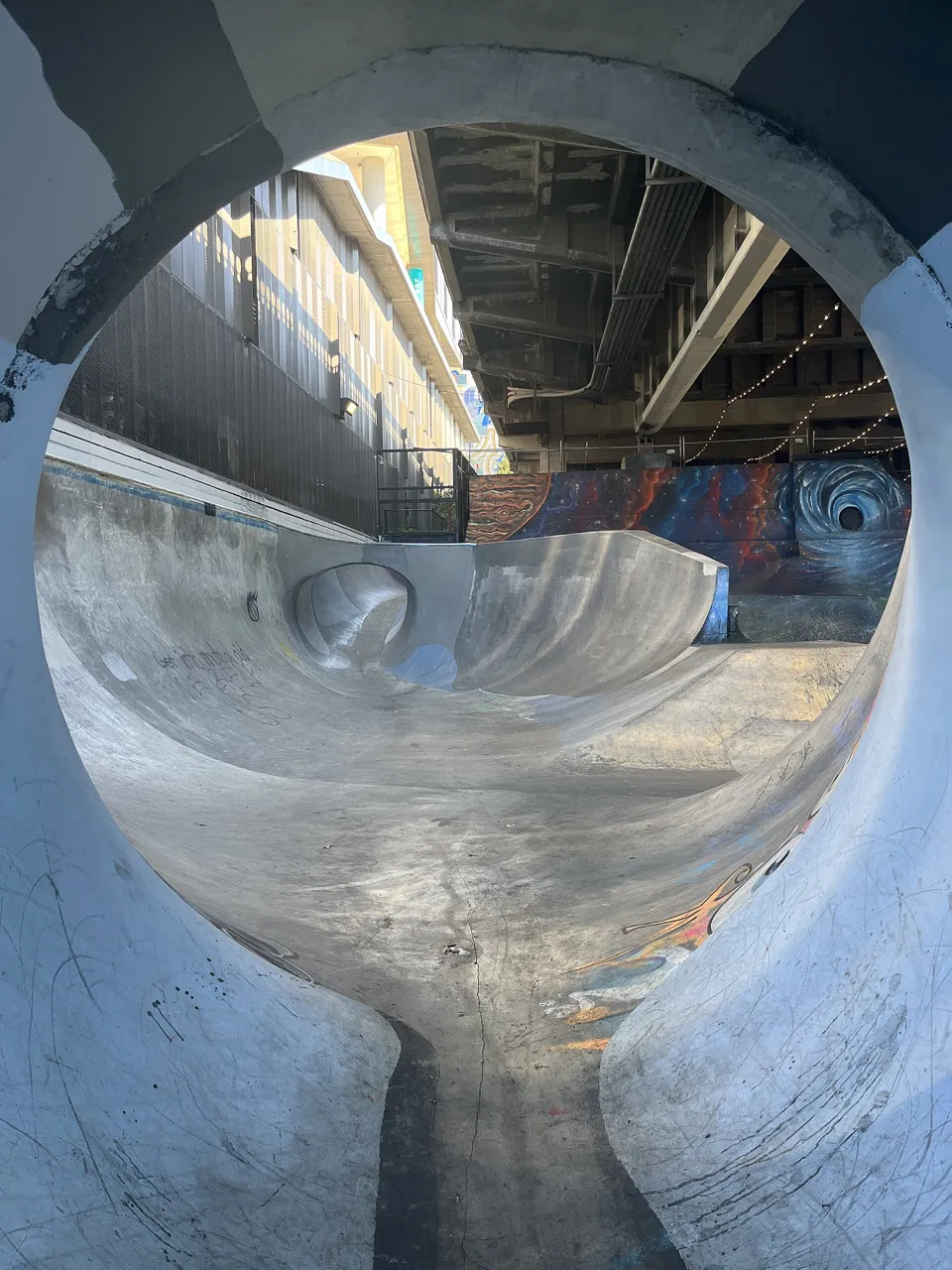
| Full pipe | A tube you can ride all the way around, like the one at Louisville's David Armstrong Extreme Park |
 i
Surfaces
Of the parks in our directory with a surface tagged in OpenStreetMap, about 81% are concrete. Concrete is fast, smooth and lasts for decades. Older and smaller parks sometimes use asphalt with metal or composite ramps bolted on top (called modular or prefab parks), and indoor parks are often built from wood, which is softer and quieter.
Where to see each style
For a famous bowl, see Venice Beach Skatepark. For a big street plaza, see Grant Skate Park in Chicago. For a park with both plus a full pipe, see David Armstrong Extreme Park.